The following terms define the residential uses listed in TABLE 404.D as permitted or conditional in each zoning district.
Accessory dwelling unit (ADU) (as defined by K.S.A. 12-757). Means a secondary housing unit that is subordinate to the principal structure on the same lot and may include a separate kitchen, bathroom and entrance. Accessory dwelling units may be wholly within, or may be detached from, a principal structure. See SECTION 404.E.1.a for special use standards.
Assisted living. Means dwelling units used by adult persons needing or desiring assistance with day-to-day living matters, and may include supervised nursing care, and where skilled nursing care is not prohibited but is provided on an intermittent or limited term basis, or if limited in scope, a regular basis. Typical uses include retirement communities in which housekeeping services, common dining facilities and recreational and social activities are offered to residents, state-licensed residential health care facilities not attached to a nursing facility and state-licensed intermediate care facility for the mentally retarded. The term assisted living does not include group home, group residence, hospital or nursing facility.
Group home (as defined by K.S.A. 12-736). Means any dwelling unit occupied by not more than ten persons, including eight or fewer persons with a disability who need not be related by blood or marriage and not to exceed two staff residents who need not be related by blood or marriage to each other or the residents of the home, which dwelling unit is licensed by a regulatory agency of the state, including the Kansas Department of Social and Rehabilitation Services, the Kansas Department of Health and Environment or the Kansas Department of Aging. Group home also includes state licensed “Home Plus” adult care residences. See SECTION 404.E.1.b for special use standards.
Group residence. Means a residential facility providing cooking, sleeping and sanitary accommodations for a group of people, not defined as a family, on a weekly or longer basis. Typical uses include fraternity or sorority houses, dormitories, residence halls, boarding or lodging houses, children’s homes, children in need of care under the Code for Care of Children and emergency shelters for the homeless and for victims of crime, abuse or neglect and include establishments providing guidance services for persons receiving non-court ordered alcohol or chemical dependence treatment which will comply with all applicable regulatory requirements of federal, state or local government agencies. The term group residence does not include group home, correctional placement residence, or short-term residential rental.
Group residence, limited. Means a group residence that is occupied by six to fifteen persons, including staff members who reside in the facility.
Group residence, general. Means a group residence that is occupied by more than fifteen persons, including staff members who reside in the facility.
Live-work. Means a structure consisting of one dwelling unit above or behind a fire-separated flexible ground floor space that can accommodate a range of non-residential uses. The flex space and residential unit typically have separate street entrances, and the flex space typically has a taller height and a shopfront frontage.
Manufactured home (as defined by K.S.A. 12-742). Means a structure consisting of one or more mobile components manufactured to the standards embodied in the federal Manufactured Home Construction and Safety Standards Act generally known as the HUD Code, established pursuant to 42 U.S.C. 5403. Such units shall provide all the accommodations necessary to be a dwelling unit and shall be connected to all utilities in conformance with applicable regulations. For purposes of these regulations, the term manufactured home, when used by itself, shall not include a residential design manufactured home as defined in these regulations. See SECTION 404.E.1.c for special use conditions.
Manufactured home park. Means a parcel of land that has been planned and improved in some manner and used or intended to be used by occupied Manufactured Homes not placed on permanent foundations. The term Manufactured Home Park does not include sales lots on which unoccupied Manufactured Homes, whether new or used, are parked for the purposes of storage, inspection, or sale; nor does it include a tract of land on which a Manufactured Home as a second Dwelling Unit has been permitted on a temporary basis as a Conditional Use in accordance with these regulations.
Manufactured home subdivision. Means a subdivision that is platted for development as individual lots for manufactured homes, modular homes, residential-design manufactured homes, and site-built single-family dwelling units, all of which are required to be placed on permanent foundations.
Multi-family. Means the use of a site for five or more dwelling units within a single building. For the purposes of these regulations, multi-family shall also mean apartment and multiplex.
Apartment. Means a structure with twelve or more dwelling units arranged side-by-side and/or stacked, typically with a shared entry from the street.
Multiplex. Means a structure with five to twelve dwelling units arranged side-by side and/or stacked, typically with a shared entry from the street.
Residential-design manufactured home (as defined by K.S.A. 12-742). Means a manufactured home on permanent foundation which has:
(1) Minimum dimensions of 22 body feet in width,
(2) A pitched roof, and
(3) Siding and roofing materials which are customarily used on site-built homes.
See SECTION 404.E.1.d and Appendix E-504 for special use standards.
Single-family (as defined by K.S.A. 12-757). Means a detached dwelling arranged, intended or designed to be occupied by a single family, or the use of a lot for one principal dwelling unit. See SECTION 404.E.1.e for special use standards.
Three- and four- family. Means the use of a lot for three or four principal dwelling units within a single building. For the purposes of these regulations, three- and four-family shall also mean triplex and fourplex.
Fourplex. Means the use of a lot for four attached dwelling units arranged side-by-side and/or stacked, typically with shared or individual entrances from the street.
Triplex. Means the use of a lot for three attached dwelling units arranged side-by-side and/or stacked, typically with shared or individual entrances from the street.
Townhouse (as defined by K.S.A. 12-757). Means a single-family dwelling unit typically constructed in a group of three or more attached units in which each unit is on its own separate lot and extends from foundation to roof with a yard or public way on not less than two sides.
Two-family (as defined by K.S.A. 12-757). Means a semi-detached dwelling arranged, intended or designed to be occupied by a single family, or the use of a lot for two attached principal dwellings units. For the purposes of these regulations, two-family shall also mean a duplex. See SECTION 404.E.1.e for special use standards.
Side-by-side two-family. Means the use of a lot for two attached principal dwelling units arranged side-by-side, typically with separate street entrances.
Stacked two-family. Means the use of a lot for two attached principal dwelling units arranged one above the other, typically with separate street entrances.
The following terms define the public and civic uses listed in TABLE 404.D as permitted or conditional in each zoning district.
Auditorium or stadium. Means an open, partially enclosed or fully enclosed facility used or intended to be used primarily for spectator sports, entertainment events, expositions and other public gatherings. Typical uses include convention and exhibition halls, sports arenas and amphitheaters.
Cemetery. Means land used or intended to be used for burial of the dead, whether human or animal, including a mausoleum or columbarium. A funeral home may be included as an accessory use to a cemetery.
Church or place of worship. Means a premise or site used primarily or exclusively for religious worship and related religious services or established place of worship, convent, seminary, or similar facility owned or operated by a bona fide religious group for religious activities.
Community assembly. Means an establishment providing meeting, recreational, educational, cultural, or social facilities for a private membership or non-profit association, primarily for use by members and guests. Typical uses include fraternal organizations, Class A Clubs, philanthropic and charitable institutions, private museums, art galleries, observatories, planetariums, botanical gardens, arboretums, zoos, and aquariums.
Correctional facility. Means a facility providing housing and care for individuals confined for violations of law. Typical uses include jails, prisons, and juvenile detention centers.
Correctional placement residence (as defined by K.S.A. 22-4913). Means a facility for individuals or offenders that provides residential and/or rehabilitation services for those who reside or have been placed in such facilities due to any one of the following situations:
(1) Prior to, or instead of, being sent to prison;
(2) Received a conditional release prior to a hearing;
(3) As a part of a local sentence of not more than one year;
(4) At or near the end of a prison sentence, such as a state operated or franchised work release program, or a privately operated facility housing parolees;
(5) Received a deferred sentence and placed in facilities operated by a community corrections; or
(6) Require court ordered guidance services for alcohol or chemical dependence.
Such facilities will comply with the regulatory requirements of a federal, state, or local government agency; and if such facilities are not directly operated by a unit of government, they will meet licensure requirements that further specify minimum service standards.
Correctional placement residence, limited. Means a correctional placement residence occupied by three to fifteen individuals, including staff members who may reside there.
Correctional placement residence, general. Means a correctional placement residence occupied by more than fifteen individuals, including staff members who may reside there.
Day care. Means an establishment that provides care, protection, and supervision for individuals on a regular basis away from their primary residence for less than 24 hours per day. The term does NOT include the following:
(1) Kindergartens or nursery schools or other daytime programs operated by public or private Elementary, Middle and High Schools or institutions of higher learning;
(2) Facilities operated in connection with a shopping center or other principal activity, where individuals are cared for temporarily while parents or custodians are occupied on the premises, or are in the immediate vicinity and readily available;
(3) Special activity programs, including athletics, crafts instruction and similar activities conducted on a periodic basis by civic, charitable and governmental organizations; or
(4) A "preschool" operated by a church or place of worship as an accessory use and that is not leased to another group to operate and that meets the Kansas Department of Health and Environment regulations as a "preschool."
Day care, home occupation. Means a day care center operated as a home occupation that provides care, protection, and supervision for no more than ten individuals at any one time, including those under the supervision or custody of the day care provider and those under the supervision or custody of employees.
Day reporting center. Means a facility that provides nonresidential community supervision services to individuals or offenders who are under supervision of a court and any of whom are required to report to the facility for three or more days per week for six or more hours per day.
Golf course. Means a tract of land developed for the purpose of providing private golf recreation services and support facilities. Included within this definition shall be regulation golf courses, executive golf courses, par-three golf courses, and any combination thereof on a common tract of land. Specifically excluded shall be pitch and putt courses, independent driving ranges and miniature golf courses.
Government service. Means buildings or facilities owned or operated by a government entity and providing services for the public, including utilities and recreational services. Typical uses include administrative offices of government agencies and utility billing offices.
Hospital. Means an institution that:
(1) Offers services more intensive than those required for room, board, personal services and general nursing care;
(2) Offers facilities and beds for use beyond 24 hours by individuals requiring diagnosis, treatment, or care for illness, injury, deformity, infirmity, abnormality, disease or pregnancy; and
(3) Regularly makes available at least clinical laboratory services, diagnostic X-ray services and treatment facilities for surgery or obstetrical care, or other definitive medical treatment of similar extent. Hospitals may include offices for medical and dental personnel, central service facilities such as pharmacies, medical laboratories, and other related uses.
Library. Means a publicly operated facility housing a collection of books, magazines, audio and video tapes, or other material for borrowing and use by the general public.
Neighborhood swimming pool. Means any non-publicly owned swimming pool that is not located on the same lot as a residential dwelling unit but that is intended as an amenity for use by the residents and their guests of that subdivision or by a group of subdivisions in the immediate vicinity.
Nursing facility. Means any state licensed place or facility operating 24 hours a day, seven days a week, caring for six or more individuals not related within the third degree of relationship to the administrator or owner by blood or marriage and who, due to function impairments, need skilled nursing care to compensate for activities of daily living limitations and includes state licensed “nursing facility for mental health; and a state licensed “residential health care facility” when it is attached to a state licensed Nursing Facility. The term nursing facility does not include assisted living, group home, group residence or hospital.
Parks and recreation. Means a park, playground, or community facility that is owned by or under the control of a public agency or homeowners' association and that provides opportunities for active or passive recreational activities, and a cultural facility that provides cultural services to the public, including a museum, art gallery, observatory, planetarium, botanical garden, arboretum, zoo, or aquarium that is owned by or under the control of a public agency. For purposes of this definition, parks and recreation shall include those parks, community facilities, and cultural facilities that are owned by or under the control of a public agency and leased to private entities for recreational activities, including recreational and cultural uses that involve paid admission or that allow the sale of cereal malt beverages or alcoholic beverages for consumption on the premises.
Recycling collection station, private. Means outdoor freestanding containers that are designed to receive, and store pre-sorted recyclable materials not intended for disposal and that are available only to those members or employees of the church, school, office building, or other principal use located on the same property as the station. This definition shall not include containers used for curbside recycling or containers used by a commercial or industrial enterprise for collection and/or compression of materials that are a byproduct or integral part of such enterprise. See SECTION 404.E.2.a for special use standards.
Recycling Collection Station, public. Means outdoor freestanding containers not occupying an area greater than 400 square feet (exclusive of area required for vehicular access) that are designed to receive and store pre-sorted recyclable materials not intended for disposal and that are available to the general public. See SECTION 404.E.2.a for special use standards.
Recycling processing center. Means a building or land use in excess of 400 square feet devoted to the receipt, separation, storage, baling, conversion, and/or processing of recyclable materials, but not including wrecking/salvage yard. See SECTION 404.E.2.b for special use standards.
Renewable energy systems. Means either a Wind Energy Conversion System (WECS) or a Solar Energy Conversion System (SECS). Those terms shall mean the following:
(1) Solar Energy Conversion System (SECS). Means a commercial facility that converts sunlight into electricity, whether by photovoltaics (PV), concentrating solar thermal devices (CST), or other conversion technology, for the primary purpose of wholesale sales of generated electricity and includes all associated support facilities including but not limited to, roads, substations, operation and maintenance buildings, as specified in the application.
(2) Wind Energy Conversion System (WECS). Means the combination of mechanical and structural elements used to produce electricity by converting the kinetic energy of wind to electrical energy. Wind Energy Conversion Systems consist of the turbine apparatus and any other buildings, support structures and other related improvements necessary for the generation of electric power from wind and intended for wholesale sales of generated electricity.
Reverse vending machine. Means an automated mechanical device that accepts one or more types of recyclable materials and issues a cash refund or a redeemable credit slip. A reverse vending machine may sort and reduce materials mechanically, provided the entire process is enclosed within the machine.
Safety services. Means a facility for conduct of public safety and emergency services, including fire and police protection services and emergency medical and ambulance services.
School, elementary, middle, & high. Means the use of a site for instructional purposes on an elementary or secondary level, including both public schools as well as private schools that have curricula similar to those in public schools.
University or college. Means an institution of higher education offering undergraduate or graduate degrees in higher learning, including seminaries.
Utility, major. Means generating plants; electrical switching facilities and primary substations; water and wastewater treatment plants; water tanks; and radio, television and microwave transmission towers; and similar facilities of agencies that are under public franchise or ownership to provide the general public with electricity, gas, heat, steam, communication, rail transportation, water, sewage collection or other similar service. The term major utility shall not be construed to include corporate or general offices; gas or oil processing; manufacturing facilities; postal facilities, communication switching facilities that are accompanied by office uses, telecommunication carrier with transmission equipment for long-distance call and high-speed Internet connections with one or more telecommunication carrier located within a building.
Utility, minor. Means services and facilities of agencies that are under public franchise or ownership to provide services that are essential to support development and that involve only minor structures, such as poles and lines, and structures not exceeding 150 cubic feet in size and six feet in height that do not generate discernable noise, odor or vibration within any nearby residential district, and that comply with the setback requirements of the district in which they are located.
The following terms define the commercial uses listed in TABLE 404.D as permitted or conditional in each zoning district.
Adult entertainment establishment. Means any commercial establishment which is an adult bookstore, adult motion picture theater, adult hotel, adult motion picture arcade, or escort service as defined in CHAPTER 5, ARTICLE 7, Haysville Municipal Code, and includes any businesses involving adult entertainment, as defined herein.
Airport or airstrip. Means any landing area, runway or other facility designed, used, or intended to be used either publicly or by any person or persons for the landing and taking off of aircraft, including all necessary taxiways, aircraft storage, and tie-down areas, hangars, and other necessary buildings and open spaces. The term airport or airstrip does not include heliport.
Animal care, general. Means a use providing veterinary services for large animals, and that may include small animals or household pets, and for which boarding facilities may also be provided.
Animal care, limited. Means a use providing veterinary services for small animals or household pets for which there are no outside animal runs, and for which boarding facilities may also be provided.
Automated teller machine (“ATM”). Means a mechanized consumer banking device operated by a financial institution for the convenience of its customers, whether outside or in an access-controlled facility. ATMs located within a building shall be considered accessory to the principal use unless the ATM is likely to be an independent traffic generator. See SECTION 404.E.3.a for special use standards.
Bank or financial institution. Means an establishment engaged in deposit banking. Typical uses include commercial banks, savings institutions, and credit unions. The term bank or financial institution also includes ATMs.
Bed and breakfast inn. Means the use of an owner-occupied or manager-occupied residential structure to provide rooms for temporary lodging or lodging and meals for not more than fifteen transient guests on a paying basis.
Broadcasting/recording studio. Means an establishment primarily engaged in the provision of broadcasting and other information relay services accomplished through the use of electronic and telephonic mechanisms, including radio, television, film, or sound recording studios.
Car wash. Means an establishment engaged in cleaning or detailing motor vehicles, whether self-service or automated.
Construction sales and service. Means an establishment engaged in the retail or wholesale sale of materials used in the construction and/or maintenance of buildings or other structures and/or grounds, as well as the outdoor storage of construction equipment or materials on lots other than construction sites. Typical uses include lumberyards, home improvements centers, lawn and garden supply stores, electrical, plumbing, air conditioning, and heating supply stores, swimming pool sales, construction and trade contractors’ storage yards, landscape installation and/or maintenance services and pest extermination services. See SECTION 404.E.3.b for special use standards.
Convenience store. Means an establishment engaged in the retail sale of food, beverages, gasoline and other frequently or recurrently needed merchandise for household or automotive use and which may specifically include a car wash as an accessory use, but shall not include vehicle repair.
Entertainment establishment. Means any event center or any person or entity that provides entertainment, excluding adult entertainment, as defined herein.
Event center. Means premises that are frequently rented out for public or private activities that are not repeated on a weekly basis, and that are not open to the public on a daily basis at times other than when an event is scheduled.
Farmer’s market. Means an outdoor place or market area with a formalized location where more than one Kansas farmer or grower gathers to sell agricultural products they have grown or raised. Other activities and other sellers may be accommodated at the market, but the sale of agricultural products shall be the focal point of the market activity. Other products that may be sold would typically include dried flowers, crafts and handicrafts that are made in the home, original artwork, and certain prepared foods.
Funeral home. Means an establishment engaged in preparing the human deceased for burial or cremation and arranging and managing funerals.
Heliport. Means the area of land, water, or structure, including any building or facilities thereon, used or intended to be used for the landing and takeoff of helicopters.
Hotel or motel. Means an establishment used, maintained or advertised as a place where sleeping accommodations are supplied for short term use by transient guests, usually for less than a week, in which rooms are furnished for the accommodation of such transient guests, which may have as an accessory use one or more dining rooms, and may include individual kitchen facilities. Typical uses include hotels, motels, tourist courts and emergency shelters for the homeless and for victims of crime, abuse or neglect.
Kennel, hobby. Means premises housing five to ten adult dogs owned by the property resident.
Kennel, boarding/breeding/training. Means premises housing five or more adult dogs, three or more of which are owned by someone other than the business owner, and premises housing over ten adult dogs.
Medical service. Means an establishment providing therapeutic, preventive, or corrective personal treatment services on an out-patient basis by physicians, dentists, and other practitioners of the medical or healing arts, as well as the provision of medical testing and analysis services. Typical uses include medical and dental offices and clinics, blood banks and medical laboratories.
Microbrewery. Means a brewery that:
(1) Is licensed by the Director of Alcohol Beverage Control of the state Department of Revenue;
(2) Produces not less than 100 nor more than 30,000 barrels of beer or more than 100,000 gallons of hard cider per year, in accordance with K.S.A. 41-308B; and
(3) Does so in a completely enclosed building.
See SECTION 404.E.3.c for special use standards.
Mobile food unit. Means any self-contained vehicle, trailer, cart, wagon, or other type of conveyance from which any food and/or beverage is offered for sale.
Monument sales. Means an establishment primarily engaged in the retail sale of monuments, including, but not limited to, headstones, footstones, markers, statues, obelisks, cornerstones, and ledges for the placement on graves, including indoor or outdoor storage.
Nightclub. Means an establishment that provides entertainment, which may include the provision of dancing by employees or patrons, and which may or may not serve food, alcoholic liquor or cereal malt beverage by the individual drink.
Nurseries and garden centers. Means a place of business where retail and wholesale products and produce are sold to the customer. These centers, which may include a nursery and/or greenhouses, and may include plants, nursery products and stock, and other garden and farm variety tools and utensils.
Office, general. Means an establishment providing executive, management, administrative or professional services, but not involving medical or dental services or the sale of merchandise, except as incidental to a permitted use. Typical uses include real estate, insurance, property management, investment, employment, travel, advertising, law, architecture, design, engineering, accounting and the teaching of these and similar activities, and communication switching facilities and telecommunication carriers that are accompanied by office uses and with all facilities within the building or underground.
Parking area, accessory. Means a parking lot or garage that is accessory to a parking lot or garage which is constructed as required by these regulations and is located on the same or adjacent lot as the principal use served.
Parking area, commercial. Means a parking lot or parking garage that is built as a facility to provide parking for a fee to the general public, as opposed to a parking lot or garage which is constructed as required by these regulations or accessory parking for another building.
Pawnshop. Means an establishment primarily engaged in the loaning of money on the security of property pledged in the keeping of the pawnbroker, and the sale of such property.
Personal care service. Means an establishment primarily engaged in the provision of frequently or recurrently needed services involving the care of a person or his personal goods or apparel. Typical uses include beauty and barber shops, electrolysis studios, shoe shining and/or repair operations, tailors and neighborhood laundry and dry cleaning operations.
Personal improvement service. Means an establishment primarily engaged in the provision or informational, instructional, personal improvement, and similar services of a nonprofessional nature. Typical uses include portrait shops, photography studios, art and music schools, licensed massage therapists, health and fitness studios, swimming clubs, tattooing and body piercing, and handicraft or hobby instruction.
Post office substation. Means a facility or structure owned by the U.S. Postal Service that is used for the collection, sorting, and distribution of mail within several zip code areas and having limited retail services for the general public, such as the sale of stamps, postcards and postal insurance.
Printing and publishing. Means the production of books, magazines, newspapers, and other printed matter, as well as record pressing and publishing, and engraving and photoengraving.
Recreation and entertainment, indoor. Means a privately-owned establishment offering recreation, entertainment, or games of skill to the general public or members that is wholly enclosed in a building. Typically uses include bowling alleys, indoor theaters, bingo parlors, pool halls, billiard parlors, video game arcades, racquetball, and handball courts, and amusement rides. It does not include buildings typically accessory to a subdivision that are for use by the subdivision’s residents and their guests.
Recreation and entertainment, outdoor. Means a privately-owned establishment offering recreation, entertainment, or games of skill to the general public or members wherein any portion of the activity takes place in the open. Typical uses include archery ranges, batting cages, golf driving ranges, drive-in theaters, miniature golf courses, “pitch and putt” facilities, tennis courts, and amusement rides. It does not include golf courses, parks, open space, and recreational facilities typically accessory to a subdivision that are for use by the subdivision’s residents and their guests.
Recreational vehicle campground. Means the use of land designated for occupancy by recreational vehicles for temporary or transient living purposes, including the use of camping spaces for tents. See SECTION 404.E.3.d for special use standards.
Restaurant. Means an establishment where the principal business is the sale of food and beverages for consumption, including the retail sale of alcoholic liquor or cereal malt beverages for consumption on the premises.
Retail fulfilment center. Means a commercial use in which goods are stored, assembled, packaged, and fulfilled for direct delivery or customer pickup, where sales transactions primarily occur off-site through online, mobile, or telephone ordering platforms. Retail Fulfillment Centers are distinct from General Retail, Secondhand Stores, and Pawnshops in that sales transactions occur primarily off-site through e-commerce platforms. They are also distinct from Warehousing, Wholesale and Business Services, as well as Freight and/or Truck Terminals, in that all activities are direct to the consumer. See SECTION 404.E.3.e for special use standards.
Retail, general. Means the sale or rental of commonly used goods and merchandise for personal or household use, but excludes those classified more specifically in this section. Typical uses include grocery stores, department stores, furniture stores, clothing stores and establishments providing the following products or services: household electronic equipment, sporting goods, bicycles, office supplies, home furnishings, household appliances, wallpaper, carpeting and floor-covering, art supplies, kitchen utensils, jewelry, drugs, cosmetics, books, notions, antiques or automotive parts and accessories.
Riding academy or stable. Means a commercial establishment for boarding, breeding, training, or raising of horses not owned by the owners or operators of the establishment, rental of horses for riding, or other equestrian activities. The term riding academy or stable shall not include rodeo.
Rodeo. Means a competition, exhibition, or demonstration involving persons, equines, and/or bovines in which participants display various skills in one more events such as, but not limited to, bareback riding, saddle bronco riding, street wrestling, roping, team roping, tie-down roping, barrel racing, bull riding, or similar events.
Secondhand store. Means a retail establishment other than an antique store that engages in the purchase and resale of used goods such as clothing, furniture, appliances, books, and other household items.
Service station. Means an establishment primarily engaged in the retail sale of gasoline or other motor fuels that may include accessory activities, such as the sale of lubricants, automotive accessories, or supplies, the lubrication or washing of motor vehicles, the minor adjustment or repair of motor vehicles and may specifically include a car wash. See SECTION 404.E.3.f for special use standards.
Short-term residential rental. Means any non-owner-occupied dwelling unit which:
(1) Contains rooms furnished for the purposes of providing lodging to transient guests;
(2) Is kept, used, maintained, advertised or held out to the public as a place where sleeping accommodations are available for pay or compensation by transient guests; and
(3) Rental is less than 28 days.
See SECTION 404.E.3.g for special use standards.
Tavern and drinking establishment (as defined in K.S.A. 41-2601). Means premises that may be open to the general public, where alcoholic liquor or cereal malt beverage by the individual drink is sold. For the purposes of these regulations, the term tavern and drinking establishment shall include Class B Club.
Teen club. Means any building or part or other enclosed place where a teen dance is held or teen dancing is permitted.
Vehicle and equipment sales, outdoor. Means an establishment engaged in the retail or wholesale sale or rental, from the premises, of motor vehicles or equipment, along with incidental service or maintenance. Typical uses include new and used automobile and truck sales, automobile rental, boat sales, motorcycle sales, construction equipment rental yards, trailers and/or moving trailer rental. See SECTION 404.E.3.h for special use standards.
Vehicle repair, limited. Means a use providing repair of motor vehicles or maintenance services within completely enclosed buildings, but not including paint and body shops or other general vehicle repair services. Typical uses include businesses engaged in the following activities:
(1) Electronic tune-ups;
(2) Brake repairs (including drum turning);
(3) Air conditioning repairs;
(4) Transmission and engine repairs;
(5) Generator and starter repairs;
(6) Tire repairs;
(7) Front-end alignments;
(8) Battery recharging;
(9) Lubrication; and/or
(10) Sales, repair and installation of minor parts and accessories, such as tires, batteries, windshield wipers, hoses, windows, etc.
Vehicle repair, general. Means an establishment primarily engaged in painting of or body work to motor vehicles or heavy equipment. Typical uses include paint and body shops. See SECTION 404.E.3.i for special use standards.
Vocational school. Means a use providing education or training in business, commercial trades, language, arts or other similar activity or occupational pursuit, and not otherwise defined as a university, college, or elementary, middle, and high school.
Warehouse, self-service storage. Means an enclosed storage facility of a commercial nature containing independent, fully enclosed bays that are leased to persons exclusively for dead storage of their household goods or personal property.
Wireless communication facility. Means a lot containing equipment at a fixed location that enables wireless communications between user equipment and a communications network, including, but not limited to:
(1) A wireless support structure consisting of a freestanding support structure, such as a monopole, guyed, or self-supporting tower or other suitable existing or alternative structure designed to support or capable of supporting wireless facilities;
(2) A base station that supports or houses an antenna, transceiver, coaxial cables, power cables or other associated equipment at a specific site that is authorized to communicate with mobile stations, generally consisting of radio transceivers, antennas, coaxial cables, power supplies and other associated electronics;
(3) Equipment associated with wireless services such as private, broadcast and public safety services, as well as unlicensed wireless services and fixed wireless services such as microwave backhaul; and/or
(4) Radio transceivers, antennas, coaxial or fiber- optic cable, regular and backup power supplies and comparable equipment, regardless of technological configuration.
The following terms define the industrial, manufacturing, and extractive uses listed in TABLE 404.D as permitted or conditional in each zoning district.
Asphalt or concrete plant, general. Means an establishment engaged in the manufacture, mixing, batching or recycling of asphalt, asphaltic cement, cement or concrete products.
Asphalt or concrete plant, limited. Means a temporary establishment engaged in the manufacture, mixing, batching or recycling of asphalt, asphaltic cement, cement or concrete products for use on a government funded construction project.
Basic industry. Means an establishment engaged in the basic processing and manufacturing of materials or products predominately from extracted or raw materials, or a use engaged in storage or manufacturing processes that involve or have the potential to involve commonly recognized offensive conditions. Typical uses include fat rendering plants; poultry and rabbit dressing; pulp processing and paper products manufacturing; stockyards; slaughterhouses; steel works; tanneries; acid manufacture; cement, lime, gypsum, or plaster of Paris manufacture; distillation of bones; fertilizer manufacture; garbage, offal or dead animals’ incineration, reduction or dumping; glue manufacture; gas manufacture; and petroleum refineries.
Construction burn site, limited. Means a location where clean tree waste that is created as a result of accepted construction industry practices of clearing a property prior to development, or as a result of a construction project, such as the installation, replacement or repair of sewer, water, drainage, paving, or other similar development activities, is permitted to be burned under controlled circumstances three or less times a year. Clean tree waste is defined as trunks, branches and attached leaves of woody perennial plants typically characterized by a main or multiple trunks that support branches and leaves. Lumber, sheet rock, yard waste, insulation, or other material normally disposed of at a construction and demolition or municipal solid waste landfill is not permitted to be burned or disposed of at a construction burn site.
Construction burn site, general. Means a location where clean tree waste that is created as a result of accepted construction industry practices of clearing a property prior to development, or as a result of a construction project, such as the installation, replacement, or repair of sewer, water, drainage, paving, or other similar development activities, is permitted to be burned under controlled circumstances four or more times a year. Clean tree waste is defined as trunks, branches and attached leaves of woody perennial plants typically characterized by a main or multiple trunks that support branches and leaves. Lumber, sheet rock, yard waste, insulation, or other material normally disposed of at a construction and demolition, or municipal solid waste landfill is not permitted to be burned or disposed of at a construction burn site. The term construction burn site, general does not include a construction and demolition or a municipal solid waste landfill.
Freight and/or truck terminal. Means a building or area in which freight brought by commercial motor vehicles or rail is assembled and/or stored for routing in intrastate or interstate shipment by commercial motor vehicle or rail, or where commercial motor vehicles are stored and dispatched as common carriers. This use may include the overnight parking of commercial motor vehicles and sleeping, laundry, and other facilities for truck drivers.
Gas and/or fuel storage and sales. Means the use of a site for bulk storage and wholesale distribution of flammable liquid, gas, or solid fuel, excluding below-ground storage that is clearly ancillary to an allowed principal use on the site.
Hazardous operations. Means activities that present serious hazards to human life and health. Typical uses include arsenals, atomic reactors, explosives and fireworks manufacture, hazardous waste disposal, medical waste disposal, and radioactive waste handling.
Landfill. Means a disposal facility employing an engineered method of disposing of solid waste, including demolition and construction debris.
Manufacturing, light. Means the manufacturing, compounding, processing, assembling, packaging or testing of goods or equipment, including research activities, conducted entirely within an enclosed structure, with no outside storage, serviced by a modest volume of trucks or vans and imposing a negligible impact on the surrounding environment by noise, vibration, smoke, dust or pollutants. Typical uses include ceramic shops, candle-making shops, custom jewelry manufacturing, electronic and computer products assembly, production of instruments and lenses for medical, dental, optical, scientific, and other professional purposes, and upholstery shops. See SECTION 404.E.4.a for special use standards.
Manufacturing, medium. Means the manufacturing, compounding, processing, assembling, packaging or testing of goods or equipment within an enclosed structure or an open yard that is capable of being screened from neighboring properties, serviced by a modest volume of trucks or other vehicles. Typical uses include ice cream manufacturing, millwork and cabinetry, monument and grave marker manufacturing, precision machining of tools, dies and jigs, and other professional purposes.
Manufacturing, heavy. Means other types of manufacturing not included in the definitions of light manufacturing and medium manufacturing.
Mining or quarrying. Means the extraction of metallic and nonmetallic minerals, excluding oil or natural gas. Typical uses include sand, soil and gravel pit operations, quarries, and mines. See SECTION 404.E.4.b for special use standards.
Oil and gas drilling. Means the subsurface extraction of oil or natural gas.
Research services. Means an establishment engaged in conducting basic and applied research, including production of prototype products when limits to the minimum scale necessary for full investigation of the merits of a product, excluding production of products used primarily or customarily for sale or for use in non-prototype production operations.
Rock crushing. Means an establishment engaged in crushing rock or stone milling.
Solid waste incinerator. Means a permanent facility operated alone or in conjunction with a recycling processing center or landfill for the purpose of burning solid waste or trash and converting it to ash.
Storage, outdoor. Means the keeping, storing, placing or locating outside of an enclosed structure for more than 72 consecutive hours any property, goods, products, equipment, cargo containers, or other similar items. The term outdoor storage does not include vehicle storage yard. See SECTION 404.E.4.c for special use standards.
Transfer station. Means any enclosed facility where solid wastes are transferred from one vehicle or rail car to another or where solid wastes are stored and consolidated before being transported for disposal elsewhere.
Vehicle storage yard. Means a site where one or more motor vehicles (except inoperable vehicles), boats, trailers, or unoccupied recreational vehicles are stored outside of an enclosed building for compensation for more than 72 consecutive hours.. The term vehicle storage yard does not include wrecking/salvage yard but may include impound lots. See SECTION 404.E.4.d for special use standards.
Warehousing. Means the storage of materials, equipment, or products within a building for manufacturing use or for distribution to wholesalers or retailers, as well as activities involving significant movement and storage of products or equipment. Typical uses include major mail distribution centers, frozen food lockers, and moving and storage firms, but excluding self-service storage warehouses.
Welding or machine shop. Means a workshop where machines, machine parts, or other metal products are fabricated. Typical uses include machine shops, welding shops, and sheet metal shops.
Wholesale or business services. Means an establishment primarily engaged in the display, storage, and sale of bulk goods or services to other businesses, typically retailers, for resale or further distribution. It may also include the sale of bulk goods and services directly to individual consumers
Wrecking/salvage yard. Means a lot, land, or structure, or part thereof, used for the collecting, dismantling, storing, and/or salvaging of machinery, equipment, appliances, inoperable vehicles, vehicle parts, bulky waste, salvage material, junk, or discarded materials; and/or for the sale of parts thereof. Typical uses include motor vehicle salvage yards and junkyards.
The following terms define the agricultural uses listed in TABLE 404.D as permitted or conditional in each zoning district.
Agriculture. Means a use of any land for the purpose of growing plants, crops, trees and other agricultural or forestry products or for the purpose of raising livestock. The term agriculture also includes the roadside selling of products produced on land owned, leased, or legally controlled by the producer (farmer, rancher, horticulturalist, viticulture, apiary, or similar agricultural pursuits). The definition shall include, as a permitted accessory use, the sale of nursery stock, firewood, Christmas trees and other plants and produce raised on-site. Typical activities include, but are not limited to: Farmer’s market which permits the sale of agricultural products by other producers; U-pick-it activities; flower arranging; canning/cooking; gardening demonstrations; winery tours and tastings; corn mazes; agriculture related interpretive facilities; agricultural exhibits and tours; agriculturally related educational and learning workshops or experiences; horseback riding; non-commercial camping; bonfire/campfire themed events; service of food and beverages; hayrides; pumpkin patch sales and any other uses determined by the Zoning Administrator to be similar. See SECTION 404.E.5.a for special use standards.
Agricultural processing. Means initial processing of agricultural products that is reasonably required to take place in close proximity to the site where they are produced. Typical uses include sawmills and packinghouses. Slaughterhouses are specifically excluded from this definition.
Agricultural research. Means the use of land and buildings for agricultural research and the cultivation of new agricultural products. This shall include greenhouses that are used for research purposes only.
Agricultural sales and service. Means an establishment primarily engaged in the sale or rental of farm tools and implements, feed and grain, tack, animal care products, propane, butane, anhydrous ammonia, farm supplies and the like, and including accessory food sales and machinery repair services. This definition shall also include greenhouses that are used for wholesale and/or retail purposes.
Grain storage. Means facilities for the warehousing of agricultural products. Typical uses include grain elevators.
Adjacent. Means lying near or close to, neighboring. In the context of these regulations, the term adjacent also means touching or abutting.
Adult entertainment. Means any exhibition, performance, interaction, display or dance of any type, including but not limited to, talking, singing, reading, listening, posing, computer internet activities, computer programs with sex based content, serving food or beverages, soliciting the sale of food, beverages or entertainment, pantomiming, modeling, removal of clothing, or any service offered on a premises where such action is intended to arouse or excite the sexual desires of the entertainer, other entertainers, or the patron(s), or if the interaction is characterized by an emphasis on the exposure, depiction or description of “specified anatomical areas” or the conduct or stimulation of “specified sexual activities,” as defined in CHAPTER 5, ARTICLE 7 of the City Code.
All-weather surface. Means an improved, generally pervious surface of either:
1) Compacted rock or crushed concrete, a minimum of 4” inches deep, utilizing a minimum of 1” inch in diameter rock with not more than 10% fines for a binder;
2) Asphalt millings;
3) Brick paver stone, a minimum of 2 3/8” inches thick and placed over base material a minimum of 5 inches deep;
4) Any other similar pervious surface; or
5) Any surface defined as a hard surface.
Every all-weather surface must be properly maintained and kept free of potholes, weeds, grass, dust, trash, and miscellaneous scattered objects (debris) to qualify as an all-weather surface. A surface that is not maintained free of weeds and debris is not an all-weather surface as an improperly developed or maintained surface does not meet the goals or the intent of this definition.
Alteration. Means any change, addition or modification in the construction of a structure.
Base material. Means a base layer to be installed underneath certain types of all-weather and hard surfaces that is a minimum of 4 inches deep crushed stone or gravel, topped with sand a minimum of 1 inch deep.
Basement. Means any floor level below the first story in a building.
Board. Means the Board of Zoning Appeals.
Building (as defined in the 2018 INTERNATIONAL BUILDING CODE). Means any structure utilized or intended for supporting or sheltering any occupancy. For the purpose of these regulations, all buildings shall be considered structures; however, not all structures shall be considered buildings.
Accessory building. Means a building that is subordinate to and serves a principal building or structure; is subordinate in purpose, floor area, and height to the principal building or structure served; contributes to the comfort, convenience or necessity of occupants of the principal building or structure served; and is located on the same zoning lot as the principal building or structure.
Auxiliary building. Means an accessory building that does not exceed 99 square feet in size or any other accessory building that does not require a building permit. Such structures may be built on a substandard permanent foundation. A portable metal storage shed on a concrete slab with modified footings, a gazebo and a dog house are all examples of auxiliary buildings.
Principal building. Means a building in which the principal use of the site is conducted.
Temporary building. Means a partially or completely assembled building constructed and designed to be reused multiple times and transported to different building sites. Temporary buildings includes buildings, offices, sheds, warehouses or open-air storage used temporarily by building contractors for the storage of construction materials and equipment incidental and necessary to on-site permitted construction of utilities, principal buildings, or other development or community facilities; tents; and other similar structures.
Building height (as defined in the 2018 INTERNATIONAL BUILDING CODE). Means the vertical distance above the average existing grade to the highest point of the roof. The height of a stepped or terraced building shall be the maximum height of any segment of the building.
 Building line. Means the perimeter of
that portion of a building or structure nearest a property line, but excluding
open steps, terraces, cornices and other ornamental features projecting from
the walls of a building or structure.
Building line. Means the perimeter of
that portion of a building or structure nearest a property line, but excluding
open steps, terraces, cornices and other ornamental features projecting from
the walls of a building or structure.
Code. Means the City of Haysville, Kansas Municipal Code.
Cargo container. Means any portable, weather-resistant receptacle, container or other structure that is designed or used for the storage or shipment of household goods, commodities, building materials, furniture, or merchandise. See APPENDIX E-506 for special use standards.
Class “A” club (as defined in K.S.A. 41-2601). Means a premises owned or leased by a corporation, partnership, business trust or association and which is operated thereby as a bona fide nonprofit social, fraternal or war veterans’ club, as determined by the Director of Alcoholic Beverage Control of the Kansas Department of Revenue, for the exclusive use of the corporate stockholders, partners, trust beneficiaries or associates (hereinafter referred to as members) and their families and guests accompanying them, as provided in K.S.A. 41-2637. Membership is required.
Class “B” club (as defined in K.S.A. 41-2601). Means a premises operated for profit by a corporation, partnership or individual, to which members of such club may resort for the consumption of food or alcoholic beverages and for entertainment. Membership is not required.
Commission. Means the City of Haysville Planning Commission.
Comprehensive plan. Means any plan or map adopted by the City for guidance of growth and improvement of the City and its environs including modifications or refinements that may be made from time to time.
Construction equipment. Means equipment used in the construction, improvement, and/or maintenance of buildings or other structures and/or grounds.
Court. Means an open, unoccupied space other than a yard on the same lot with a building or group of buildings, and which is bounded on two or more sides by such building or buildings.
Inner court. Means a court other than an outer court. The length of an inner court is the minimum horizontal dimension measured parallel to its longest side. The width of an inner court is the minimum horizontal dimension measured at right angles to its length.
Outer court. Means a court which opens onto a required yard, or street or alley. The width of an outer court is the minimum horizontal dimension measured in the same general direction as the yard, street or alley upon which the court opens. The depth of an outer court is the minimum dimension measured at right angles to its width.
District. Means any section of the City for which the regulations governing the use of buildings and premises and the height and area of buildings are uniform.
Dwelling unit. Means a building, or a portion of a building, that contains living facilities for not more than one family and that includes provisions for sleeping, cooking, eating and sanitation.
Floodway fringe (as defined in K.S.A. 12-742). Means those portions of a flood plain outside the boundaries of a regulatory floodway and within stream reaches where such a floodway has been established.
Floodplain (as defined by K.S.A. 12-742). Means land adjacent to a watercourse subject to inundation from a flood having a chance occurrence in any one year of 1%.
Floor area. Means the sum of the square footage of all of the floors of a structure or building, including the areas of basements, but excluding attached garages or space used for off-street parking or loading, breezeways, enclosed or unenclosed porches, and accessory structures.
Frontage. Means the lot line(s) abutting a public right-of-way.
Primary frontage. Means the frontage to which the principal structure is oriented. The primary frontage may be determined by the street address in the case of undeveloped lots.
Secondary frontage. Means any frontage that is not the primary frontage.
Garage. Means an accessory structure or portion of a principal structure for the parking and temporary storage of automobiles of the occupants of the premises, and wherein:
1) Not more than one space is rented for parking to persons not occupants of the premises;
2) Not more than one commercial vehicle per dwelling unit is parked or stored; and
3) The commercial vehicles permitted do not exceed 26,000 pounds gross vehicle weight rating.
Grade. Means the lowest point of elevation of the existing surface of the ground, within the area between the building and a line 5 feet from the building.
Governing body. Means the Mayor and City Council of the City of Haysville.
Hard surface. Means an improved, generally impervious surface of either:
1) Asphalt, a minimum of 2” inches deep and placed over base material a minimum of 4” inches deep;
2) Concrete, a minimum of 4” inches deep;
3) Pervious concrete; or
4) Other similar generally impervious surface.
Home occupation. Means a business, profession, occupation or trade conducted in a dwelling unit for gain or support by a resident of the dwelling unit and which is accessory to the use of the dwelling unit as a residence.
Improvements. Means all facilities constructed or erected by a subdivider within a subdivision to permit and facilitate the use of lots or blocks for residential, commercial or industrial purposes. Improvements shall include all facilities listed in ARTICLE VII of the subdivision regulations adopted by the city.
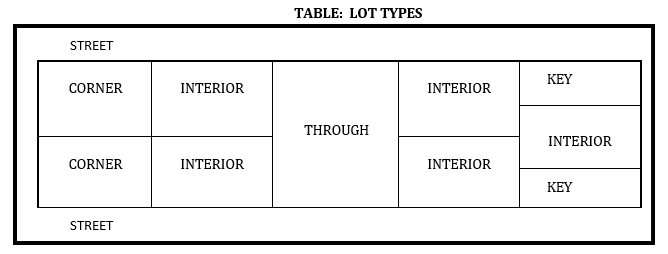
Lot. Means a portion or basic parcel of a subdivision or other tract of land intended to be the parcel by which such land would be individually developed and transferred. A building site or parcel of land occupied or intended to be occupied by a building and accessory structures, and including such open spaces as are required under these regulations and having its primary frontage upon a public street or officially approved place.
 Corner lot. Means a lot abutting two
or more streets at their intersection. A lot abutting on a curved street or
streets shall be considered a corner lot if straight lines drawn from the
foremost points of the side lot lines to the foremost point of the lot meet at
an interior angle of less than 135 degrees.
Corner lot. Means a lot abutting two
or more streets at their intersection. A lot abutting on a curved street or
streets shall be considered a corner lot if straight lines drawn from the
foremost points of the side lot lines to the foremost point of the lot meet at
an interior angle of less than 135 degrees.
Flag lot. Means a lot not meeting the minimum lot width requirements and where access to a public or private street is provided by means of a long, narrow driveway between abutting lots.
Interior lot. Means a lot other than a corner lot or a through lot.
Through lot. Means a lot with frontage on two parallel or approximately parallel streets.
 Lot area. Means the total horizontal
area within the lot lines of a lot.
Lot area. Means the total horizontal
area within the lot lines of a lot.
Lot depth. Means the horizontal distance between the front and rear lot lines measured along the median between the two side lot lines.
Lot lines. Means the lines bounding a lot as defined herein.
Front lot line. Means a lot line which abuts an existing or dedicated public street. In the case of a corner lot, it shall be the lot line designated as the primary frontage.
Rear lot line. Means a lot line which is opposite and most distant from the front lot line, and in the case of an irregular or triangular-shaped lot, a line 10 feet in length within the lot parallel to and at the maximum distance from the front lot line.
Side lot line. Means any lot line that is not a front lot line nor a rear lot line.
Lot of record. Means a lot or portions of one or more lots which are a part of a subdivision, or a lot described by metes and bounds, the map and/or description of which has been recorded in the Office of the Register of Deeds of Sedgwick County.
Lot width. Means the horizontal distance between the side lot lines measured at right angles to the lot depth at a point midway between the front and rear lot lines measured along lot depth.
Manufactured home park boundary line. The outermost property line that encloses the spaces/lots contained within a manufactured home park or manufactured home subdivision.
Manufactured home site. Shall mean a parcel of ground within a manufactured home park that is designated and intended to accommodate one manufactured home or mobile home, that provides service facilities for water, sewer, and electricity. Also referred to as a lot.
Metes and bounds. Means a system of describing and identifying a parcel of land by measures (metes) and direction (bounds) from an identifiable point of reference.
Mobile home. Means a movable detached single-family dwelling unit that was manufactured according to standards prior to 1976 or that does not conform to the Manufactured Home Construction and Safety Standards Act (HUD Code). Such units shall provide all of the accommodations necessary to be a dwelling unit and be connected to utilities in conformance with all applicable regulations. The term mobile home does not include a recreational vehicle.
Nonconforming lot. Means a lot lawfully existing at the time these regulations became effective, or as amended, which does not conform to the setback, lot size or other dimensional or property development standards applicable to the zoning district in which the lot is located.
Nonconforming structure. Means a structure lawfully existing at the time these regulations became effective, or as amended, which does not conform to the setback, height, or other dimensional or property development standards applicable to the zoning district in which the structure is located.
Nonconforming use. Means the use of any land, building or structure which does not comply with the use regulations of the zoning district in which such use is located but which complied with the use regulations in effect at the time the use was established.
Owner. Means any person or persons, firm or firms, corporation or corporations, or any other legal entity having legal title to land.
Parking. Means the temporary location of motor vehicles (except for inoperable vehicles), boats, trailers, and unoccupied recreational vehicles for not more than 72 consecutive hours.
Parking area, private. Means an area, other than a street or alley, used or intended to be used for the parking of operable motor vehicles, boats, trailers that are exempt from motor vehicle registration by the state or are registered or are required by law to be registered with a 2M+ Kansas license plate in the city or 8M in the County, and unoccupied recreational vehicles, any of which shall be owned, leased, borrowed, etc. by the occupants of a dwelling unit that is located on the same lot, and wherein not more than one commercial vehicle per dwelling unit is parked and the permitted commercial vehicle does not exceed 26,000 pounds gross vehicle weight rating.
Parking space. Means an area on privately owned property within or without a building or on a private or public parking area and sufficient in size for the parking of one automobile.
Planned Unit Development. Means a development guided by a total design plan in which one or more of the zoning or subdivision regulations shall be permitted to be waived or varied to allow flexibility and creativity in site and building design and location, in accordance with general guidelines.
Porch. Means a roofed structure projecting from a building and separated from the building by the walls thereof and having no enclosing features except roof supports, railing, and screen wire.
Regulations. Means the City of Haysville Planning and Zoning Regulations.
Salvage material. Means material, including but not limited to, scrap brass, scrap copper, scrap iron, scrap lead, scrap tin, scrap zinc and all other scrap metals and alloys, bones, rags, used cloth, used rope, used rubber, used tinfoil, used bottles, playground equipment, old or used machinery of any type, used tools, used appliances, used fixtures, used furniture, used utensils, used lumber, used boxes or crates (fabricated of any material), used pipe or pipe fittings, used conduit or conduit fittings, used automotive parts, used tires, and other manufactured goods that are so worn, deteriorated or obsolete as to make them unusable in their existing condition.
Screening. Means fencing, evergreen vegetation or landscaped earth berms maintained for the purpose of concealing from view the area behind such fences, evergreen vegetation or berms. Appropriate screening materials do not include mesh privacy screens.
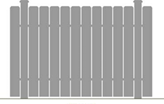
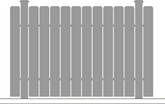
Solid screening. Means a solid barrier of 90 to 100 percent opacity made from wood, vinyl, landscaped earth berms, masonry, or other similar materials, including brick, stone, architectural tile, or a combination of these materials erected to enclose, screen, or separate areas from adjacent views. Appropriate materials do not include mesh privacy screens.
Example of 90% Opacity of Screening
Setback. Means the minimum distance that is required by these regulations between a structure and the lot line of the lot on which the structure is located.
Front yard setback. Means a setback that is to extend across the full width of the lot, the required depth of which is measured as the minimum horizontal distance between the street right-of-way line and a line parallel thereto on the lot.
Rear yard setback. Means a setback that is to extend across the full width of a lot, the required depth of which is measured as the minimum horizontal distance between the rear lot line and a line parallel thereto on the lot.
Side yard setback. Means a setback that is to extend from the front lot line to the rear lot line along the side of a lot that is contiguous or abutting another lot, the required depth of which is measured as the minimum horizontal distance between the side lot line and a line parallel thereto on the lot.
Street yard setback. Means a Setback that is to extend from the front Lot Line to the rear Lot Line along the side of a Lot that is abutting a street or street right-of-way line, the required depth of which is measured as the minimum horizontal distance between the side Lot Line and a line parallel thereto on the Lot.
Sexually oriented business. See adult entertainment.
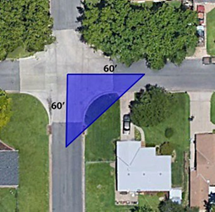
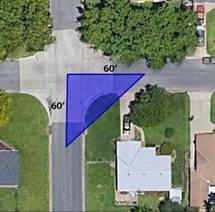
Sight triangle or vision triangle. Means the unobstructed, triangular area located at the intersection of two streets or a street and a driveway; two sides of which are measured from their corner intersection for a distance specified based on roadway speed. The third side is a line across the corner of the lot adjoining the ends of the two sides.
Obstruction. Means any object within the sight triangle that is between three and eight feet above ground level and would therefor obstruct the driver’s view of an approaching vehicle. Obstructions in sight triangles may include, but are not limited to, buildings, vehicles, signs, hedges, trees, bushes, tall crops, walls, or fences.
Example of a sight triangle.
Site plan. Means a plan that outlines the use and development of any tract of land.
Street furniture. Means objects placed in public or semi-public spaces to provide comfort, direction, safety, and convenience. The various types of street furniture include, but are not limited to, benches and other seating, planters, bollards, bicycle stands, litter bins, bus shelters, mail boxes, street lights, and wayfinding signage.
Story. Means that portion of a building included between the upper surface of any floor and the upper surface of the floor next above, except that the topmost story shall be that portion of a building included between the upper surface of the topmost floor and the ceiling or roof above. If the finished floor level directly above a usable or unused under-floor space is more than 6 feet above grade as defined here in for more than 50 percent of the total perimeter or is more than 12 feet above grade as defined herein at any point, such useable or unused under-floor space shall be considered to be a story.
Structure (as defined in the 2018 INTERNATIONAL BUILDING CODE). Means that which is built or constructed. For the purpose of these regulations, all buildings shall be considered structures; however, not all structures shall be considered buildings. Among other things, structures include buildings, mobile homes, walls, fences, billboards and poster panels.
Accessory structure. Means a structure that is subordinate to and serves a principal building or structure; is subordinate in purpose, floor area, and height to the principal building or structure served; contributes to the comfort, convenience or necessity of occupants of the principal building or structure served; and is located on the same zoning lot as the principal building or structure. A pool, or a below grade substructure, shall be considered an accessory structure.
Auxiliary structure. Means an accessory structure that does not exceed 99 square feet in size or any other accessory structure that does not require a building permit. Such structures may be built on a substandard permanent foundation. A portable metal storage shed on a concrete slab with modified footings, a gazebo and a dog house are all examples of auxiliary structures.
Principal structure. Means a structure in which the principal use of the site is conducted.
 Temporary structure. Means a
partially or completely assembled structure constructed and designed to be
reused multiple times and transported to different building sites. Temporary
structures includes buildings, offices, sheds, warehouses or open-air storage
used temporarily by building contractors for the storage of construction
materials and equipment incidental and necessary to on-site permitted
construction of utilities, principal buildings, or other development or
community facilities; tents; and other similar structures.
Temporary structure. Means a
partially or completely assembled structure constructed and designed to be
reused multiple times and transported to different building sites. Temporary
structures includes buildings, offices, sheds, warehouses or open-air storage
used temporarily by building contractors for the storage of construction
materials and equipment incidental and necessary to on-site permitted
construction of utilities, principal buildings, or other development or
community facilities; tents; and other similar structures.
Transient guest. Means a person who occupies a short-term residential rental, hotel or motel for not more than twenty-eight consecutive days.
Use. Means the purpose for which land or a building or structure is designed, arranged or intended, or for which either land or a building or structure may be occupied or maintained under these regulations.
Accessory use. Means a use that is subordinate to and serves a principal use; is subordinate in purpose to the principal use served; contributes to the comfort, convenience, or necessity of the occupants of the principal use served; is located on the same lot as the principal use; but is not an incidental use.
Conditional use. Means a use allowed in accordance with certain procedures and standards of these regulations.
Incidental use. Means a use that occurs as a result of, or in connection with, a principal use.
Principal use. Means the main and primary use of land, a building or structure.
Variance. Means authorization by the Board of Zoning Appeals, in specific cases, a deviation from the specific terms of these regulations, which will not be contrary to the public interest and where owing to special conditions, a literal enforcement of the provisions of these regulations will, in an individual case, result in unnecessary hardship, and provided the spirit of these regulations shall be observed, public safety and welfare secured and substantial justice done.
Vehicle. Shall mean any commercial vehicle, inoperable vehicle, motor vehicle, passenger vehicle, or recreational vehicle as defined herein.
Commercial vehicle. Means any truck, van, panel truck, delivery van, trailer, semitrailer or pole trailer drawn or designed to be drawn by a motor vehicle, which vehicle was designed, used and/or maintained for the transportation of more than ten persons or the delivery of property for hire, compensation, profit or in the furtherance of any commercial enterprise.
Inoperable vehicle. Means any vehicle that is unable to operate or move under its own power. It shall also mean any motor vehicle that is in an abandoned, wrecked, dismantled, scrapped, junked or partially dismantled condition that includes having no wheels, or lacking other parts necessary for the normal operation of the vehicle. It shall also mean any vehicle that because of mechanical defects, a wrecked or partially wrecked frame or body or dismantled parts, cannot be operated in a normal, and safe manner. It shall also mean any vehicle with an absence of display of current registration. An inoperable vehicle shall not include vehicles needing only the inflation of tires, the installation of a battery or the addition of fuel in order to operate. An inoperable vehicle shall also include any vehicle with uninflated tires, or otherwise meeting the definition of nuisance automobile in CHAPTER 8 of the Code of the City of Haysville.
Motor vehicle. Means every motorized vehicle, other than a motorized bicycle or a motorized wheelchair, that is self-propelled, and every vehicle that is propelled by electric power obtained from overhead trolley wires, but not operated upon rails.
Passenger vehicle. Means a motor vehicle that is designed primarily to carry ten or fewer passengers, and that is not used as a commercial vehicle.
 Recreational vehicle. Means a unit
designed as temporary living quarters for recreational, camping or travel use
that has a body width not exceeding eight feet and a body length not exceeding
40 feet. Units may have their own power, or designed to be drawn or mounted on
a motor vehicle. Recreational vehicle shall include travel trailers, truck
campers, camping trailers, converted buses, houseboats or other similar units
as determined by the Zoning Administrator. A recreational vehicle may or may
not include individual toilet and bath.
Recreational vehicle. Means a unit
designed as temporary living quarters for recreational, camping or travel use
that has a body width not exceeding eight feet and a body length not exceeding
40 feet. Units may have their own power, or designed to be drawn or mounted on
a motor vehicle. Recreational vehicle shall include travel trailers, truck
campers, camping trailers, converted buses, houseboats or other similar units
as determined by the Zoning Administrator. A recreational vehicle may or may
not include individual toilet and bath.
Yard. Means an open space, other than a court, on the same lot with a building or group of buildings, which open space lies between the building or group of buildings and the nearest lot line, is unoccupied and unobstructed from the ground upward, except as provided in these regulations.
Front yard. Means a yard extending across the full width of the lot, the depth of which is the minimum horizontal distance between the front lot line and the building line.
Rear yard. Means a yard extending across the full width of the lot between the nearest rear main building and the rear lot lines. The depth of the required rear yard shall be measured horizontally from the nearest part of a main building toward the nearest point of the rear lot lines.
Side yard. Means a yard extending from the front yard to the point of intersection of the rear yard or lot line when no rear yard exists.
Street yard. Means a yard which lies between the property line abutting a street and the street wall line of the building. If a building has a rounded street wall or if the building is on an irregular-shaped lot, wall lines extending parallel to the street wall from the points of the wall closest to the side property lines shall be used to define the limits of the street yard.
 Zero lot line. Means the location of
a building on a lot in such a manner that one or more of the building’s sides
rest directly on a lot line.
Zero lot line. Means the location of
a building on a lot in such a manner that one or more of the building’s sides
rest directly on a lot line.
Zoning (as defined by K.S.A. 12-742). Means the regulation or restriction of the location and uses of buildings and uses of land.
Zoning lot. Means a parcel of land that is designated by its owner or developer as a tract, all of which is to be used, developed or built upon as a unit under single ownership. Such lot may consist of:
1) A single lot of record;
2) A portion of a lot of record; or
3) A combination of complete lots of records, complete lots and portions of lots of record, or portions of lots of record.